Irena Sendler
Heroine of the Holocaust

January 27th is International Holocaust Remembrance Day, marking the 81st anniversary of the liberation of Auschwitz-Birkenau (the largest Nazi death camp) and serving as a solemn time to remember the six million Jewish victims of the Holocaust and the millions of other victims of Nazi persecution.
“My parents taught me that if a man is drowning, it is irrelevant what is his religion or nationality. One must help him.” —Irena Sandler
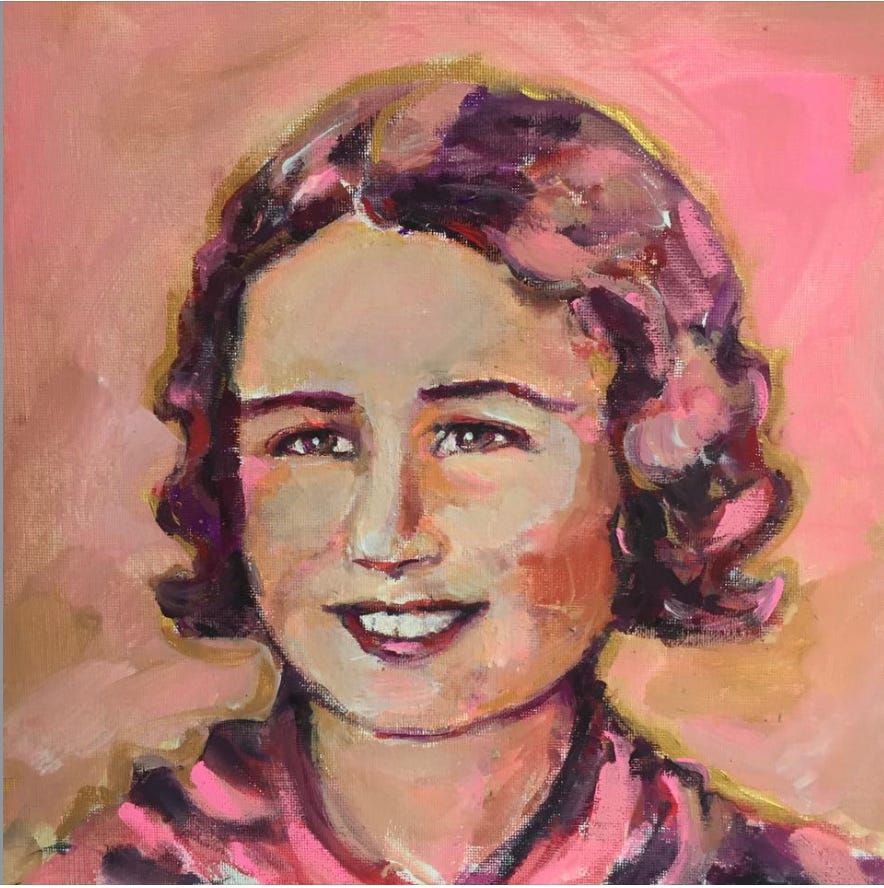
—Irena Sendler (1910-2008) was a Polish social worker who rescued 2500 Jewish children from the Warsaw Ghetto and placed them in convents and in non-Jewish families. She was allowed to go in to the houses under the guise of checking for sickness--the Nazis were terrified of “Jewish germs”, so they let her through with few questions, mostly leaving her alone. She would tuck small children away in suitcases and doctor’s bags and hide them in her car. She trained her dog to bark if a child cried or a Nazi guard came near, which would cause the guard dogs to bark in reaction, and start a distracting cocophany. Sometimes she would smuggle them out through sewers. She and her team would then take the children to convents, schools, hospitals, orphanages and private homes. To ensure the children could be reunited with their families, Irena recorded their real names and identities on thin strips of paper, which she buried in jars under an apple tree in a neighbor’s garden. Sadly, in most cases, there was no family left to return to.
Eventually, the Gestapo arrested and tortured her. Despite broken legs and feet, she refused to identify her associates or the location of the children. She escaped execution by a firing squad after friends in the resistance movement bribed a German officer. Operating under a new name, she continued her resistance work. Knowing that with every child she saved, one hundred more were sent to their deaths. Toward the end of her life, Irena said: “I could have done more. This regret will follow me to my death".
Here is a short-video I made about her some years back that includes a little more information about her story and how it finally came to be known in Poland, after decades of suppressed WWII history. (You can also read more about the teenage girls from Kansas that brought her story to light here.)